
Hort Shorts
Keeping Dahlia Tubers over the Winter
Transcribed from a presentation to membership
By Susan Zuger
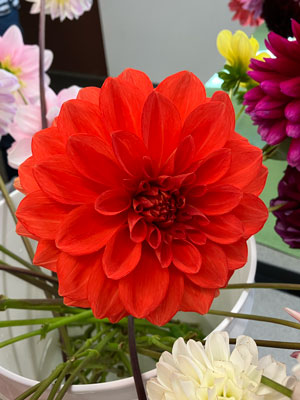
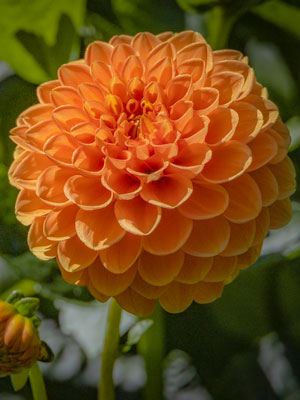
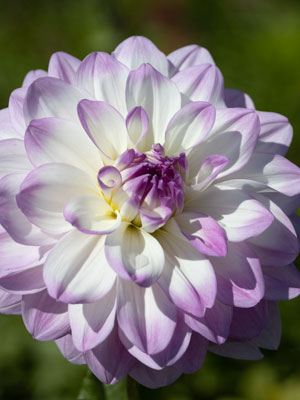
You’ve all seen the beautiful array of Dahlias on display here. Maura and her friends have been growing them and we really hope that everyone thinks about them. For years I did the miniatures and used them as ground cover to keep the weeds down and they bloomed!
There are a couple of little things to say about them. And see this plastic file cabinet? This is what you need to keep your tubers over the winter. When Christina talked about frost, you’ve got to have blackened frost. The one time that I though I would sort the dahlias by color, and I took them out before frost, I lost ninety percent of them. There is something in nature that puts them to sleep after they’ve had blackened frost. Then you dig them up, clean them off, and let them dry in the shade for a couple of days. Then, whip out your sharpie and put the name of the color or variety right on the tuber. It’s perfect.
For storage, use the cheap plastic drawers you can get at Walmart or potentially find at the swap corner and fill them. Some resources on the internet say use crumpled up newspaper to stuff in the drawers. Don’t do that. Crumpled up newspaper gets moisture and then you have mildew. You want to put vermiculite or peat moss in the drawers and then nestle the tubers in. And, if you have someplace that is cold and not freezing, they can sit there all winter in the plastic drawers. Even if they start to sprout a little bit, there aren’t so many of them that you’re going to break the little shoots that start to come out on them.

Caring for Amaryllis After Blooming
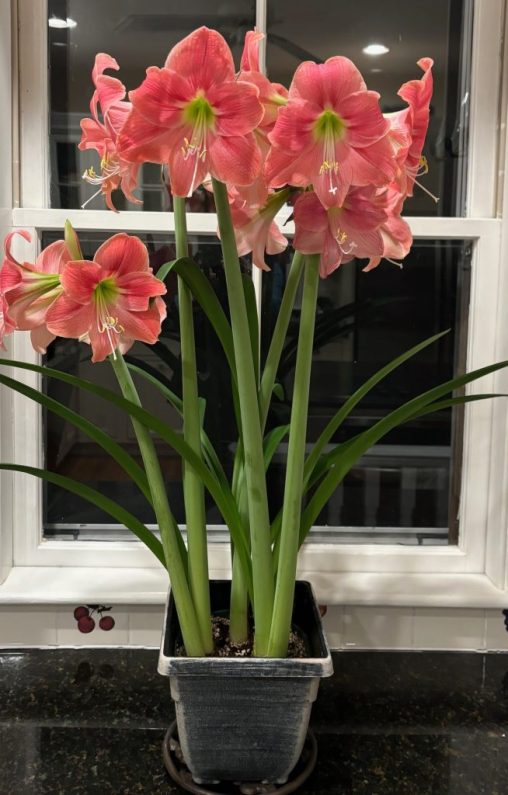
Amaryllis can rebloom year after year with just a little post-bloom care. Once the flowers fade, follow these simple steps to keep your bulb healthy and ready for next season.
After Bloom
Cut off the spent flower stalk about 1 inch above the bulb. Do not remove the leaves; they help the bulb store energy.
Spring and Summer Care
Place the plant in bright light and water when the top inch of soil dries. Fertilize monthly with a balanced houseplant fertilizer. After frost danger has passed, amaryllis can spend summer outdoors in a sunny, protected spot.
Repotting Tips
Repot only if roots are crowded or soil is depleted. Choose a pot 1–2 inches wider than the bulb. Use well-draining potting mix and leave the top third of the bulb above the soil.
Fall Dormancy
In early fall, stop watering and let leaves yellow naturally. Once dry, remove foliage and store the bulb in a cool, dark place (50–55°F) for 8–10 weeks.
Rebloom
Bring the bulb back into light and warmth, resume watering, and enjoy another season of blooms.
Seed Starting Indoors: A Simple Guide
Starting seeds indoors is a great way to get a head start on spring and grow varieties you won’t always find at garden centers. With proper timing and light, gardeners can raise strong, healthy seedlings at home.
Why Start Seeds Indoors?
Many vegetables and flowers—such as tomatoes, peppers, herbs, and annuals—need a longer growing season than outdoor conditions allow. Indoor seed starting gives plants time to develop before transplanting outdoors.
What You’ll Need
Containers with drainage, seed-starting mix (not garden soil), seeds and labels, bright light or grow lights, and a spray bottle or bottom watering.
Timing, Light, and Watering
Most seeds should be started 6–8 weeks before the last frost date. Starting too early often leads to weak, leggy plants. Light is essential. Once seeds sprout, provide 14–16 hours of bright light daily. Grow lights placed a few inches above seedlings produce the best results. Keep soil evenly moist, not soggy. Good air circulation helps prevent disease. Begin light fertilizing once seedlings develop true leaves.
Don’t Skip Hardening Off
Before planting outdoors, gradually expose seedlings to outdoor conditions over 7–10 days. This step greatly improves transplant success.